The safest way to wash almost any hat is by hand: soak it for about 30 minutes in cold water with a few drops of mild detergent, scrub the sweatband with a soft toothbrush, rinse, and air dry it on something round. A washing machine or dishwasher can work on some plain cotton or polyester caps, but it's the most common way hats lose their shape. MONGO hats are hand wash only.
This guide covers all three methods, which hats can handle which, and the mistakes that turn a good cap into a floppy one.
Which method for which hat
Start with the care label. If there isn't one, use this table. "Most caps" here means typical store-bought baseball caps; your hat's label always wins.
| Hat type | Best method | Washer or dishwasher? | How to dry |
|---|---|---|---|
| Cotton or polyester baseball cap (modern plastic brim) | Hand wash | Sometimes, if the label allows; top rack or a cap cage, cold, no heated dry | Air dry on a form or rolled towel |
| Performance / athletic cap | Hand wash | Check label; MONGO Performance Snapback: no | Air dry crown-up |
| Foam-front trucker | Hand wash, gentle on the foam | No | Air dry crown-up, out of direct heat |
| Wool or wool-blend cap | Spot clean or very gentle cold hand wash | No | Air dry, no heat |
| Vintage cap with cardboard brim | Spot clean only, don't submerge | No | Air dry |
| Leather, suede, felt or straw | Spot clean or a pro cleaner | No | Air dry away from sun |
| Knit beanie | Hand wash or gentle cycle per label | Washer per label; never the dishwasher | Lay flat |
Not sure if your brim is cardboard? Old caps (roughly pre-1980s) often are. Tap it: a hollow, papery feel means cardboard. Modern caps almost always use plastic.
Before you wash: the 30-second color test
Dampen a white cloth with water and press it against a hidden spot, like the inside of the sweatband. If color comes off on the cloth, don't submerge the hat. Spot clean it instead. Bright reds and navy cottons are the usual offenders.
How to hand wash a hat (the method that works for almost everything)
- Fill a clean sink or bucket with cold water and add a few drops of mild detergent. Swish to mix. Skip bleach.
- Spot-treat first. Dab a little detergent straight onto the sweatband and any obvious stains. For yellow sweat lines, see how to get sweat stains out of a hat.
- Soak about 30 minutes. Push the hat under so the whole thing gets wet.
- Scrub gently with a soft toothbrush, focusing on the sweatband and the front panel. Clean the whole hat, not just the stain, or you'll get a clean patch on a dingy cap.
- Rinse in cool, clean water until no suds come out.
- Press, don't wring. Squeeze water out gently, then blot with a towel. Twisting a cap is how crowns get creased.
- Air dry crown-up on a hat form, a coffee can, a ball, or a rolled towel stuffed inside the crown. Keep it out of direct sun and away from heaters. Most caps are dry within a day.
Can you wash hats in the dishwasher?
You can, with a plain cotton or polyester cap that has a plastic brim, but it's a gamble. The dishwasher works because the top rack holds the hat still. The risks are hot water and the heated dry cycle, which can warp the brim and fade color.
If your hat's label allows it and you want to try:
- Use a cap frame or cage on the top rack, alone (no dirty dishes).
- Use a small amount of detergent with no bleach, and the coolest, gentlest cycle.
- Turn off heated dry. Pull the hat out right away, reshape it while damp, and air dry.
Never put wool, cardboard-brim, foam-front, leather, or any MONGO hat in the dishwasher.
Can you wash hats in the washing machine?
Some. A cotton or polyester cap with a plastic brim can survive a cold, gentle cycle inside a cap cage or a pillowcase. A top-loader with a center agitator is the roughest option; front-loaders are gentler. The washer is the riskiest of the three methods because the tumbling crushes the crown and bends the brim, and snapback closures can crack.
Rule of thumb: if you'd be sad to lose the hat, hand wash it. It takes ten minutes of actual work.
How to wash a baseball cap that's structured
Structured caps (a stiff front with buckram backing) are the ones people ruin most. Keep the water cold, never wring, and dry the hat on something round so the front panel sets in the right shape. A wet structured cap is soft and moldable, which is useful: shape the crown and brim how you want them before it dries. For flat bills, dry flat side down; for curved ones, don't over-curve while wet (more on that in our flat vs curved bill guide).
MONGO hats: follow the label
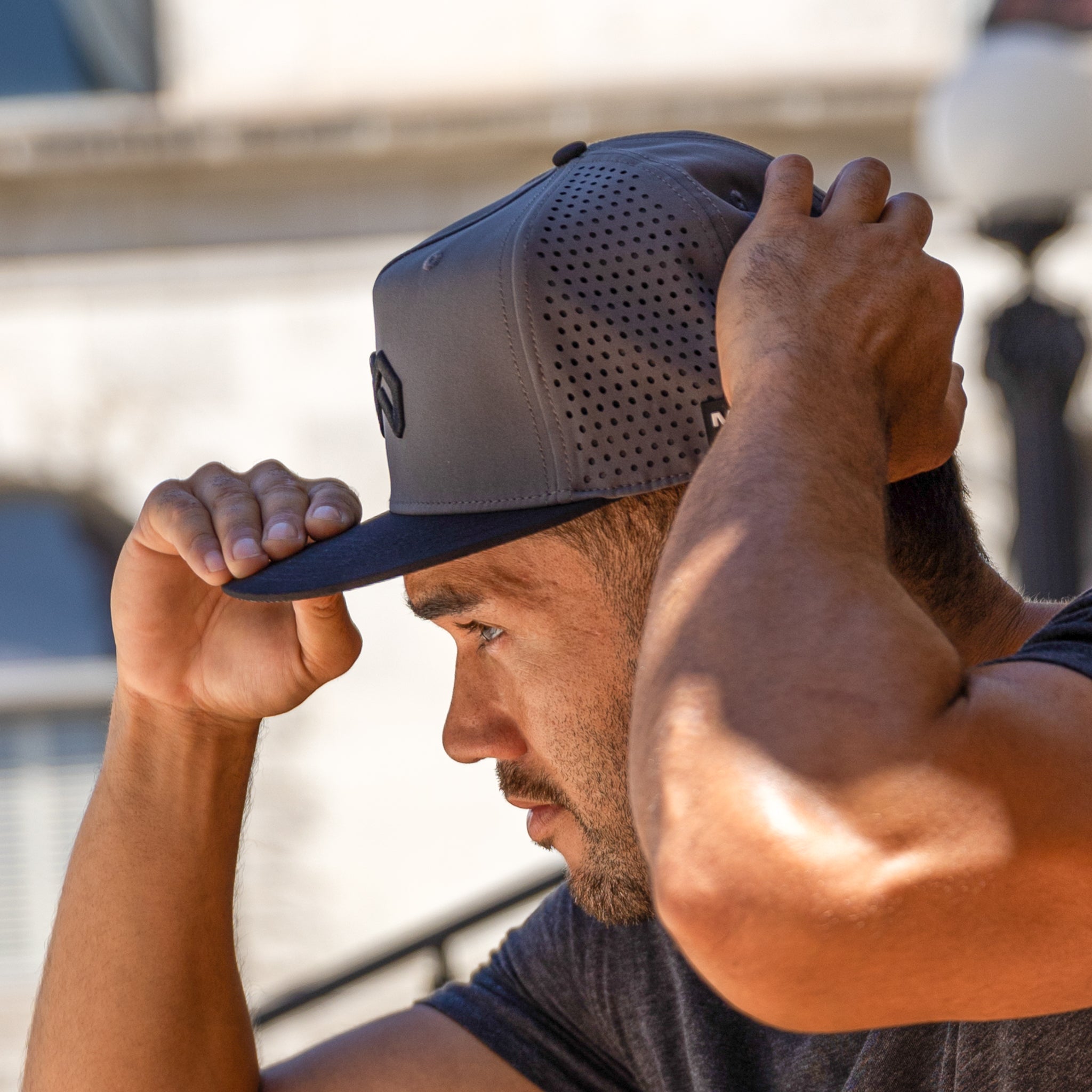
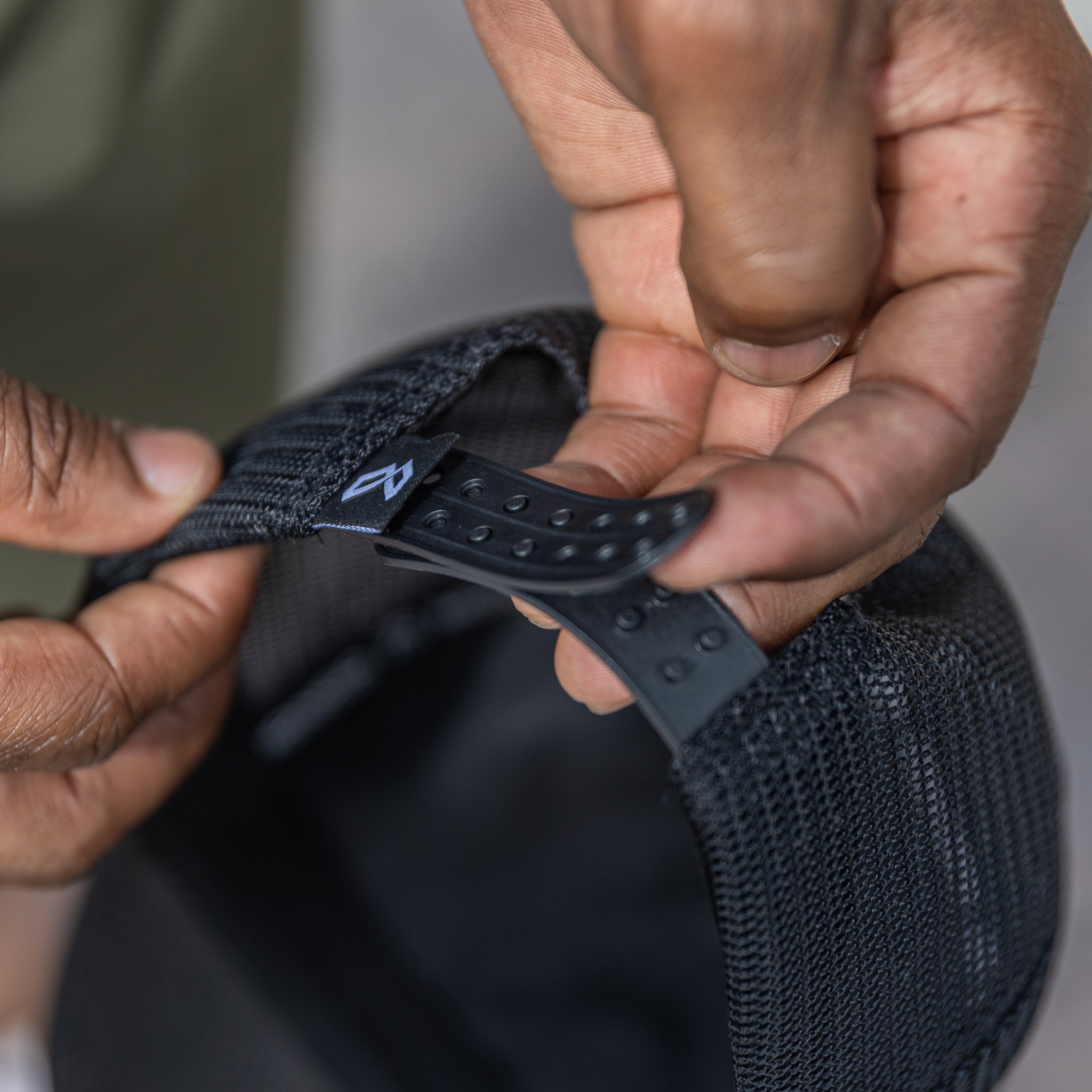
Everything above about washers and dishwashers is about most caps. MONGO hats are different on purpose: the structured deep crown and extended-range snapback are what make them fit a big head, and they're what heat and tumbling wreck first. The care label on both the XL Performance Snapback and the XL Foam Trucker says:
- Hand wash cold with a mild detergent.
- No bleach.
- No washing machine and no dryer.
- Air dry crown-up.
That rules out the dishwasher too. If you skip the label and the hat comes out of the machine lopsided, that's on the machine.
How often should you wash a hat?
There's no fixed rule. A gym or summer cap you sweat through every day needs it every week or two; a casual hat can go a month or more. Wash when the sweatband looks dark or the hat smells. Between washes, let it dry out crown-up rather than tossing it in a bag damp. Storage matters as much as washing; see how to store hats.
Mistakes that ruin hats
- The dryer. Heat warps brims and shrinks fabric. Short answer in can you put a hat in the dryer: usually no.
- Bleach on colored hats, or any bleach on hats whose label says no.
- Hot water on wool or cotton: shrinkage and fading.
- Drying flat on the crown or brim-down, which dents the shape.
- Washing a hat that never fit. No amount of cleaning fixes a cap you're wearing on the last snap. If that's you, measure your head or use the hat size calculator. If you measure 23.6 in (60 cm) or more, MONGO hats are built for sizes 7½ to 8½.
More care guides: cleaning a white hat, cleaning a foam trucker, and the MONGO materials and care guide.
FAQ
What is the best way to wash a hat?
Hand washing. Soak the hat for about 30 minutes in cold water with a few drops of mild detergent, scrub the sweatband with a soft toothbrush, rinse, press out the water, and air dry it crown-up on something round.
Can you wash hats in the dishwasher?
Some plain cotton or polyester caps with plastic brims survive the top rack on a cool cycle with heated dry turned off, but heat can warp the brim and fade color. Don't use the dishwasher for wool, cardboard-brim, foam-front, leather, or MONGO hats.
Can you wash a hat in the washing machine?
Only if the label allows it. Use a cap cage or pillowcase, cold water, and a gentle cycle, then air dry. It's the riskiest method for keeping a cap's shape. MONGO hats are not machine washable.
How do I wash a MONGO hat?
Follow the care label: hand wash cold with a mild detergent, no bleach, no washing machine or dryer, and air dry crown-up.
How do you dry a hat after washing?
Press out water without wringing, blot with a towel, and air dry the hat on a hat form, ball, or rolled towel inside the crown, away from direct sun and heaters. Don't use a dryer.
How do I know if my hat has a cardboard brim?
Older caps, roughly pre-1980s, often do. A cardboard brim feels hollow and papery when tapped. Don't submerge those caps; spot clean them only.